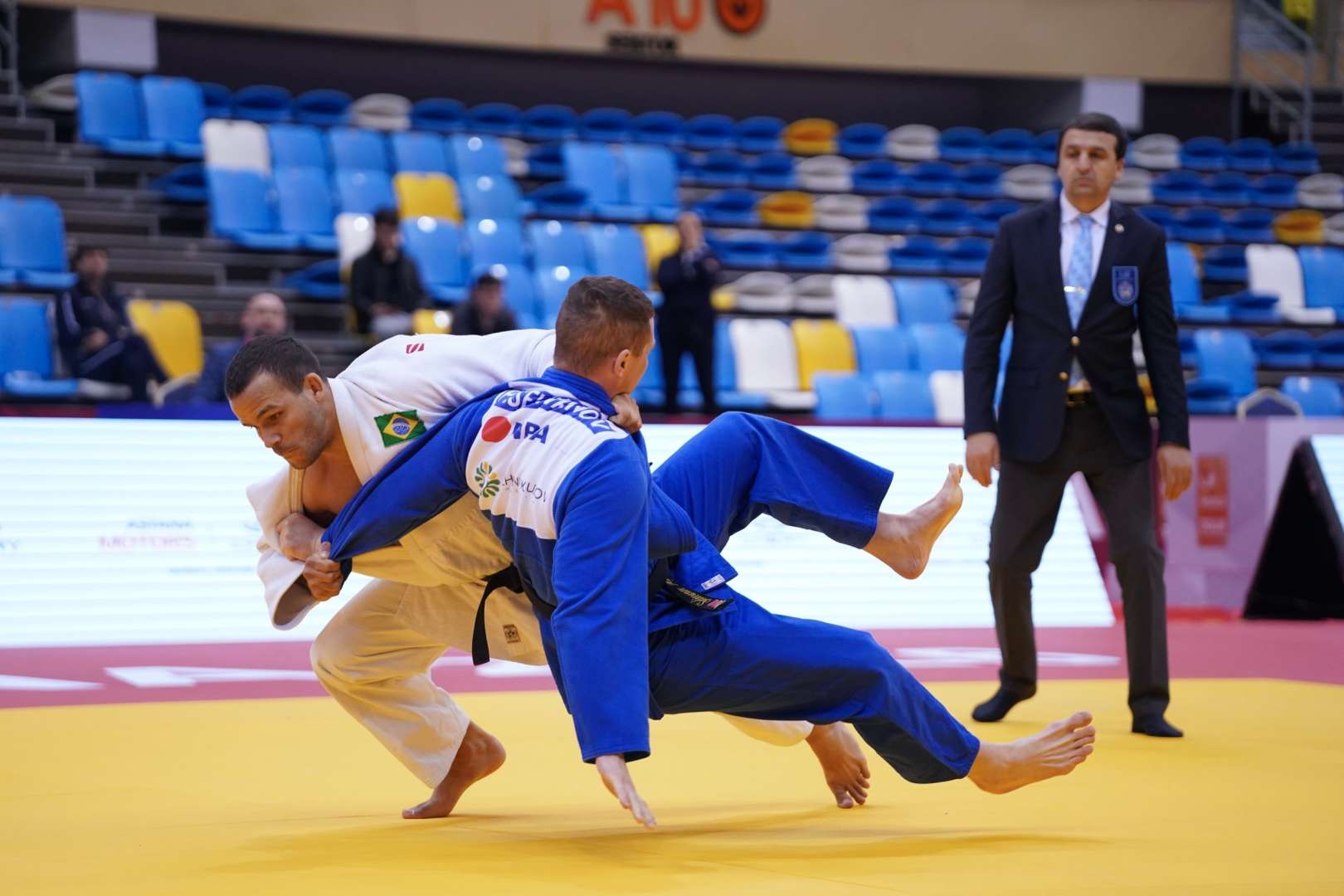

Brazil Leads the Gold Medal Count, But Success Was Shared by Many
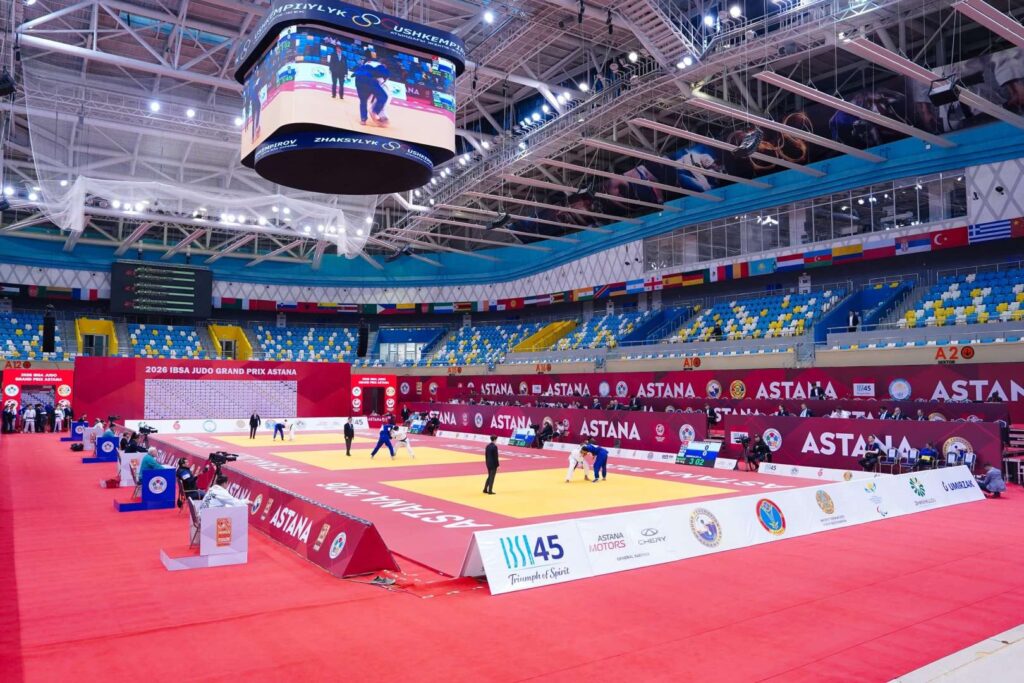
Following an action-packed opening day in Kazakhstan’s capital, the 2026 IBSA Judo Grand Prix Astana quickly moved into its second and final day of competition. The remaining nine weight categories featured a mix of Paralympic champions, IBSA world medallists and emerging talents eager to make their mark.
As the final medal contests of the IBSA circuit before the opening of qualification for the Los Angeles Paralympic Games approached, anticipation was high. The concluding final block promised elite-level performances and did not disappoint.
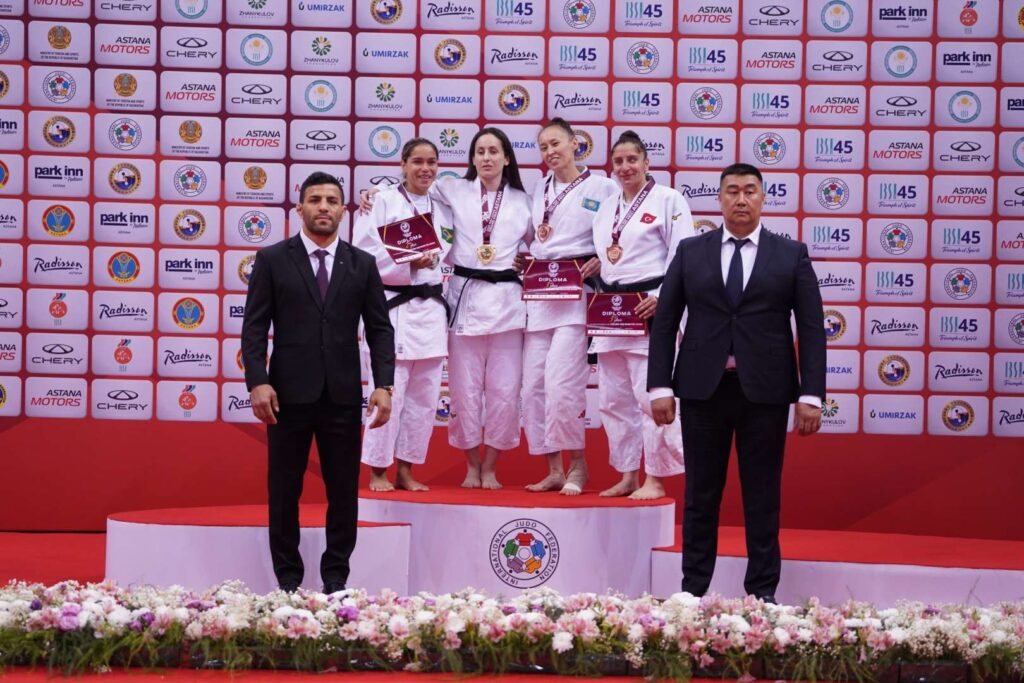
J1W -60 kg
Larissa Silva (BRA) entered the competition as the top seed but suffered an early setback when she was defeated in the quarter-final by Australia’s rising talent Maysa Abouzeid. Having already secured a victory in the round of 16, Abouzeid advanced confidently into the semi-finals. There, however, she faced reigning IBSA world champion Uljon Amrieva (UZB), who proved too strong and booked her place in the final.
Amrieva’s opponent in the gold medal match was another unseeded competitor, Karoline Duarte (BRA), who had impressed throughout the preliminary rounds. The final began at a high tempo, with Duarte searching for opportunities to launch her seoi-otoshi while Amrieva focused on hip throws and ashi-waza attacks. As the contest unfolded, Duarte demonstrated exceptional timing with her counter-attacks, catching Amrieva twice and building a two-yuko advantage during the opening half of the match.
Drawing on her extensive experience at the highest level, Amrieva gradually found solutions. She reduced the deficit with a yuko before executing a counter that transitioned into an osaekomi position under her control. From there, the Uzbek judoka maintained her dominance and secured another prestigious gold medal.
GOLD – Uljon Amrieva (UZB)
SILVER – Karoline Duarte (BRA)
BRONZE – Larissa Silva (BRA)
BRONZE – Uslu Hajabipour (TUR)
J1M -95 kg
Arthur Cavalcante Da Silva (BRA) has long established himself as one of the most reliable and competitive athletes on the IBSA Judo circuit. Known for his consistency, confidence and technical ability, he once again showcased those qualities in Astana, progressing to the final with authority.
The lower half of the draw produced a surprise contender in Pavel Selivanov (NPA). While Abylay Adilbekov (KAZ) entered as the highest-ranked athlete in that section, he was unable to maintain his position. Mousa Gholami defeated Adilbekov but then fell to Selivanov, who secured his place in the gold medal contest.
In the final, Paralympic champion Cavalcante Da Silva left no doubt about his credentials. Just over a minute into the match, he delivered a decisive ippon to claim the Astana title in emphatic fashion.
GOLD – Arthur Cavalcante Da Silva (BRA)
SILVER – Pavel Selivanov (NPA)
BRONZE – Mousa Gholami (IRI)
BRONZE – Iaroslva Andrievskii (NPA)
J1W -70 kg
Brenda Souza De Freitas (BRA) needed less than sixty seconds to secure victory in her semi-final, underlining exactly why she was the number one seed in the category. As expected, she advanced to the final, where she faced second seed Theodora Paschalidou (GRE). Having met previously, both athletes entered the contest fully aware that tactics would play a crucial role.
Paschalidou executed her strategy perfectly from the opening exchange. She attacked aggressively, showing no hesitation and immediately taking control of the match. Her approach paid off early when she scored a yuko. Maintaining relentless pressure, she continued to dictate the pace before adding a waza-ari and transitioning seamlessly into kesa-gatame to secure victory.
GOLD – Theodora Paschalidou (GRE)
SILVER – Brenda Souza De Freitas (BRA)
BRONZE – Dinara Kujulova (KAZ)
BRONZE – Esmer Taskin (TUR)
J1M +95 kg
Wilians De Araujo (BRA) arrived in Astana carrying an impressive résumé that includes Paralympic gold from Paris 2024. As the top seed in the heavyweight division, he quickly demonstrated why he remains one of the category’s leading figures.
Baglanbek Onalbek (KAZ), despite not being among the top seeds, produced an excellent run to reach the final and challenge the Brazilian. Hoping to deliver a major upset in front of the home crowd, Onalbek fought hard, but De Araujo remained composed and in control throughout the contest, ultimately securing the gold medal.
GOLD – Wilians De Araujo (BRA)
SILVER – Baglanbek Onalbek (KAZ)
BRONZE – Yerlan Utepov (KAZ)
BRONZE – Ali Navaei (IRI)
J1W +70 kg
Millena De Freitas (BRA) began the day as the athlete everyone expected to beat, and no opponent managed to stop her progress through the preliminary rounds. With second seed Erika Zoaga also enjoying a dominant morning session, an all-Brazilian final became a reality.
The contest remained evenly balanced until the midway point, when Zoaga decided to take control. She scored a waza-ari with a well-executed makikomi and immediately followed up on the ground, converting the score into a full ippon. The Brazilian team celebrated both gold and silver medals, with Zoaga emerging victorious despite entering the tournament ranked below her teammate.
GOLD – Erika Zoaga (BRA)
SILVER – Millena De Freitas (BRA)
BRONZE – Feruza Ergasheva (UZB)
BRONZE – Aktolkyn Seilbekova (KAZ)
J2M -95 kg
Marcelo Casanova (BRA) and Inigo Gerboles Lopes (ESP) appeared destined for a final showdown, but only one of them managed to reach the gold medal contest. Magomedkhabib Saaduev (NPA) ended the Spaniard’s campaign and earned his place in the final.
Saaduev applied significant pressure early through aggressive gripping, forcing Casanova onto the defensive. The Brazilian responded quickly, however, scoring a yuko to gain the advantage. Thirty seconds later he doubled his lead with another yuko, shifting the pressure firmly onto his opponent.
Despite trailing, Saaduev remained composed. Finding an opening, he launched a powerful attack that sent Casanova onto his back for ippon, dramatically turning the contest around and claiming the title.
GOLD – Magomedkhabib Saaduev (NPA)
SILVER – Marcelo Casanova (BRA)
BRONZE – Inigo Gerboles Lopes (ESP)
BRONZE – Yermek Nurkabayev (KAZ)
J2W -70 kg
Current Paralympic champion Alana Maldonado (BRA) anticipated that second seed Duygu Cete Artar (TUR) would challenge her for gold. Ultimately, that prediction proved accurate, although Australia’s Taylor Gosens ensured Cete Artar’s path was anything but straightforward.
Recently moving down from the heavyweight division, Gosens showed impressive form. Although she lost to Cete Artar in the quarter-final, she bounced back through the repechage to secure her first appearance in a final block at either weight category. Regardless of the final standings, it was a highly encouraging performance.
In the gold medal contest, Maldonado asserted control from the very first hajime. She quickly registered a yuko and soon followed with an ippon, securing both victory and another major title.
GOLD – Alana Maldonado (BRA)
SILVER – Duygu Cete Artar (TUR)
BRONZE – Cristina Dumitrescu (ROU)
BRONZE – Ayala Mereke (KAZ)
J2M +95 kg
Second seed Nacer Zorgani (FRA) endured a difficult day of competition. He was first defeated by unseeded Mohammadreza Kheirollahzadeh (IRI) and then eliminated in the repechage by Gwang Geun Choi (KOR), bringing his campaign to an early conclusion.
Kheirollahzadeh capitalised on his breakthrough victory and maintained his momentum all the way to the final, where he faced top seed Zhurkamyrza Shukurbekov (KAZ) in a highly anticipated showdown.
The reigning IBSA world champion initially appeared under pressure as Kheirollahzadeh entered the contest full of confidence and attacking intent. Shukurbekov responded with a near-scoring seoi-otoshi, sending a clear message to his opponent. Kheirollahzadeh became more cautious, but that did little to slow the Kazakh athlete.
Relentlessly attacking with repeated seoi-otoshi attempts, Shukurbekov continually disrupted his opponent’s balance and prevented meaningful attacks in return. As penalties accumulated against Kheirollahzadeh, the momentum shifted steadily toward the home favourite.
With just thirty seconds remaining, another seoi-otoshi finally earned Shukurbekov a decisive yuko, enough to secure the gold medal and delight the home crowd.
GOLD – Zhurkamyrza Shukurbekov (KAZ)
SILVER – Mohammadreza Kheirollahzadeh (IRI)
BRONZE – Cheng-Min Huang (TPE)
BRONZE – Amirhossein Nimrouzi (IRI)
J2W +70 kg
For several seasons, Rebeca Silva (BRA) and Meg Emmerich (BRA) have dominated this division, frequently meeting in major finals. In Astana, however, only Silva reached the gold medal match. Emmerich was forced into a bronze medal contest after losing her semi-final to unseeded Zarina Raifova (KAZ), who benefited from enthusiastic home support.
Unfortunately, Raifova sustained an injury during the competition and was unable to take part in the final. As a result, Silva was awarded the gold medal by default.
GOLD – Rebeca Silva (BRA)
SILVER – Zarina Raifova (KAZ)
BRONZE – Meg Emmerich (BRA)
BRONZE – Mokhinur Parmonova (UZB)
As the competition concluded, the organising team could reflect with pride on a highly successful event. The 2026 IBSA Judo Grand Prix Astana delivered excellence across every aspect, from accessibility and inclusivity to hospitality and organisational quality.
The event also highlighted the growing global reach of IBSA Judo. Athletes from 14 different countries secured medals, while competitors from 18 nations reached the final block. Brazil finished at the top of the medal standings, collecting two more gold medals than any other delegation.
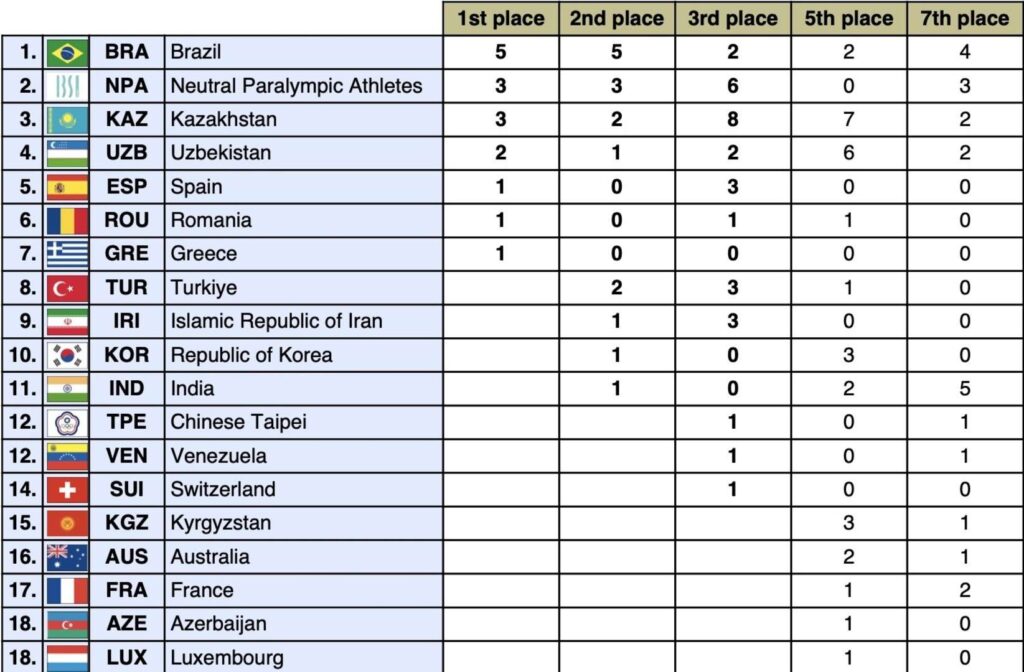
IBSA Judo continues to expand year after year thanks to the dedication and commitment of countless individuals around the world. In Astana, the Kazakhstan Paralympic Judo Federation set an outstanding example, delivering an event that showcased the sport at its very best. The judo community is already looking forward to returning to Kazakhstan.
All photos courtesy of Nurgali Zhumagazy / IBSA Judo.